Haussmannian identity is defined by its windows
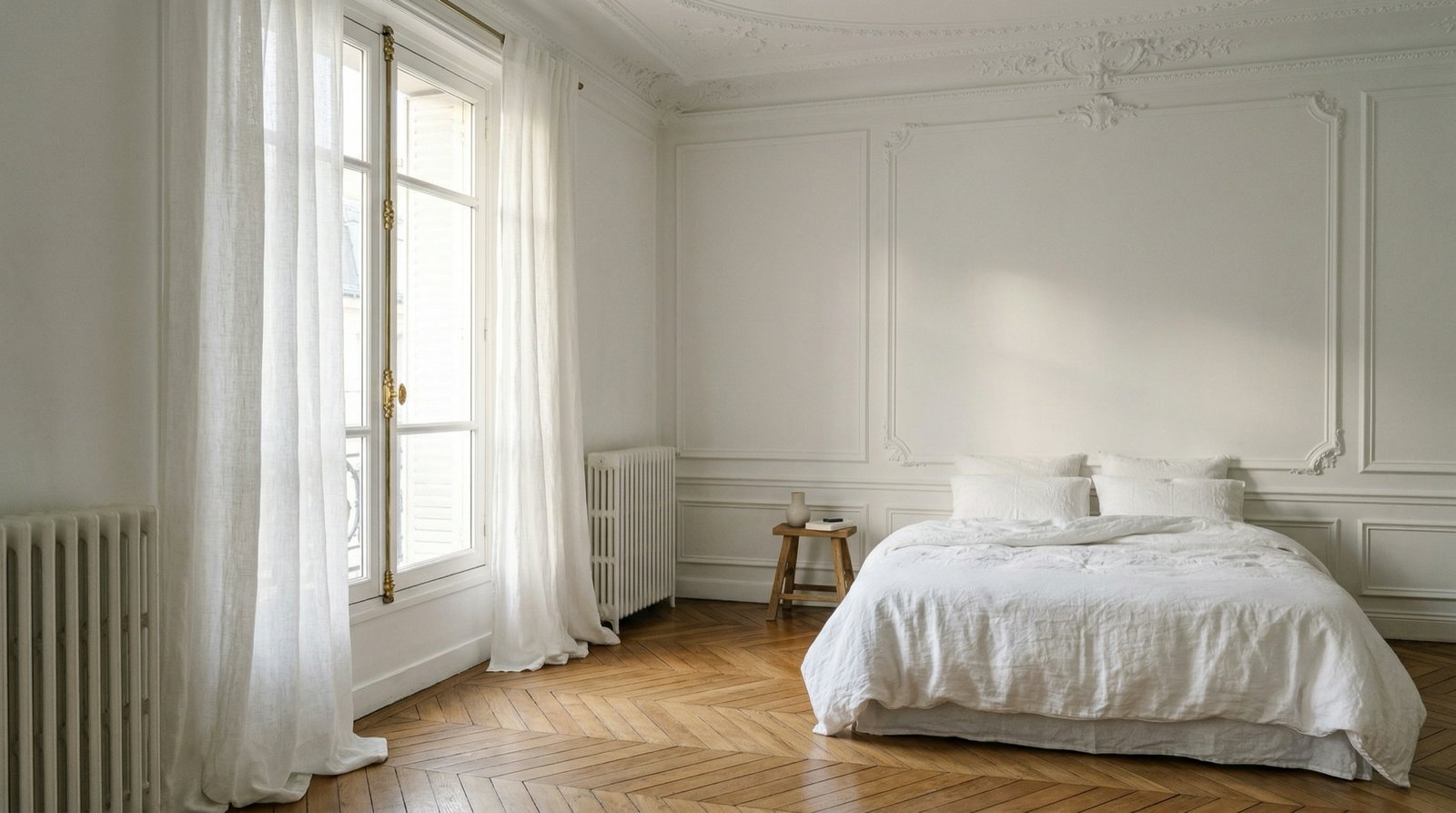
Wooden windows are among the most emblematic elements of Parisian Haussmannian heritage. Their elegant proportions, finely profiled glazing bars and French-opening mechanism tell over a century of urban architecture. Yet these ageing window frames are often responsible for considerable heat loss and insufficient acoustic comfort in the face of urban noise.
Wild Renovation works across all Parisian arrondissements to restore or replace your Haussmannian wooden windows, combining heritage respect with contemporary performance. Each project is studied in detail: laser measurement, wood-condition analysis, identification of original profiles and compliance with heritage authority requirements.
Heritage compliance: essential expertise
In conservation areas and near listed monuments — covering much of central Paris — any facade alteration is subject to approval by the ABF (Architecte des Batiments de France). Windows are no exception to this strict rule. The external profile, colour, glazing-bar proportions, opening mechanism and type of glazing visible from the street must comply with a precise specification.
Our team possesses thorough knowledge of these regulations and maintains regular dialogue with Parisian planning departments. We prepare prior-declaration dossiers, propose ABF-approved technical solutions and provide full administrative follow-up. This expertise ensures your new windows are compliant from the first submission, avoiding time-consuming back-and-forth.
The gueule de loup profile: the Haussmannian signature
The gueule de loup is the characteristic closing mechanism of Haussmannian windows. It is an inverted S-shaped interlocking system between the two casements, providing air and water tightness without requiring a fixed central mullion. This profile offers a clean visual line and maximum light. Wild Renovation reproduces this profile identically on each window, using traditional joinery techniques combined with modern silicone or EPDM seals for optimal weatherproofing.
"Preserving Haussmannian aesthetics while achieving current thermal performance — that is the art of the exceptional joiner."
Double and triple glazing: thermal and acoustic performance
Integrating high-performance glazing into a Haussmannian frame requires specific expertise. Available profile thicknesses are limited, and glazing weight must be compatible with original or equivalent contemporary hardware.
We offer several configurations adapted to each situation:
- Double glazing 4/16/4 argon — Ug 1.1 W/m2.K, ideal for the majority of Haussmannian windows with a good weight-performance balance
- Acoustic laminated double glazing 44.2/14/4 — Rw 39 dB sound reduction, recommended for facades on busy streets
- Slim triple glazing 4/10/4/10/4 — Ug 0.7 W/m2.K, reserved for profiles wide enough to accommodate 32 mm thickness
- Solar-control glazing — Reduced solar factor, ideal for south and west-facing top-floor exposures
Each glazing unit is selected based on orientation, floor level, noise exposure and heritage constraints. The result: a warmer apartment in winter, cooler in summer and significantly quieter in every season.
Restoration versus replacement
The choice between restoration and replacement arises systematically. Wild Renovation carries out a precise diagnosis of each window before making its recommendation.
Restoration: preserving the existing
When frame and casements are structurally sound, restoration is the most heritage-respectful and cost-effective solution. It includes stripping old paint layers, fungicidal and insecticidal wood treatment, replacing putty with high-performance seals, integrating double glazing into existing beading and applying a durable microporous finish. This approach preserves the charm of period joinery while significantly improving performance.
Like-for-like replacement: the lasting solution
When the wood shows deep fungal attack, irreversible warping or advanced structural wear, replacement is necessary. We manufacture new windows faithfully reproducing the original profiles — gueule de loup, glazing bars, mouldings — in wood species selected for their durability and dimensional stability.
Wood species: oak, pine, exotic wood
The choice of species directly influences the longevity and maintenance of your windows. Our joiners work with three main families:
- European oak — The quintessential noble wood, naturally weather-resistant, dense and stable. Lifespan exceeding 50 years with regular maintenance. The preferred choice for prestigious buildings
- Scots pine or maritime pine — Lighter and more economical, it offers excellent performance after autoclave treatment. Ideal for upper floors where weight must be controlled
- Exotic woods (moabi, movingui) — Naturally rot-proof, they require no treatment and resist climate variations remarkably well. Their warm tone provides distinctive character
Each species is available in stain, microporous paint or powder-coat finish to suit your aesthetic preferences and heritage requirements.
Acoustic insulation and daily comfort
Paris is one of the noisiest cities in Europe. Original Haussmannian windows, often fitted with single glazing, allow traffic noise, terrace sounds and urban life to penetrate. Replacement or restoration with acoustic double glazing delivers up to 15 dB of additional sound reduction, radically transforming daily living comfort.
Wild Renovation takes into account the specific noise environment of your address — proximity to main roads, railways or busy areas — to specify the most suitable acoustic glazing. Perimeter seals and a perfectly machined gueule de loup profile complete the insulation by eliminating parasitic air infiltration.
Complete support, from survey to installation
Each Haussmannian window project follows a rigorous process: technical visit with laser measurement, diagnosis of existing joinery condition, heritage-compliance study, proposal of technical and aesthetic solutions, workshop fabrication and installation by our master joiners. The average project duration for a full apartment is two to three weeks, with minimal impact on your daily life.