The custom wine cellar in Paris: a showcase for your finest vintages
The custom wine cellar in Paris has become an essential feature of high-end apartments. Far from a simple refrigerated cabinet, it is a true architectural space designed for optimal conservation, presentation and the pleasure of tasting. Wild Rénovation designs and builds wine cellars integrated into the most demanding Parisian interiors, combining technical rigour with refined aesthetics.
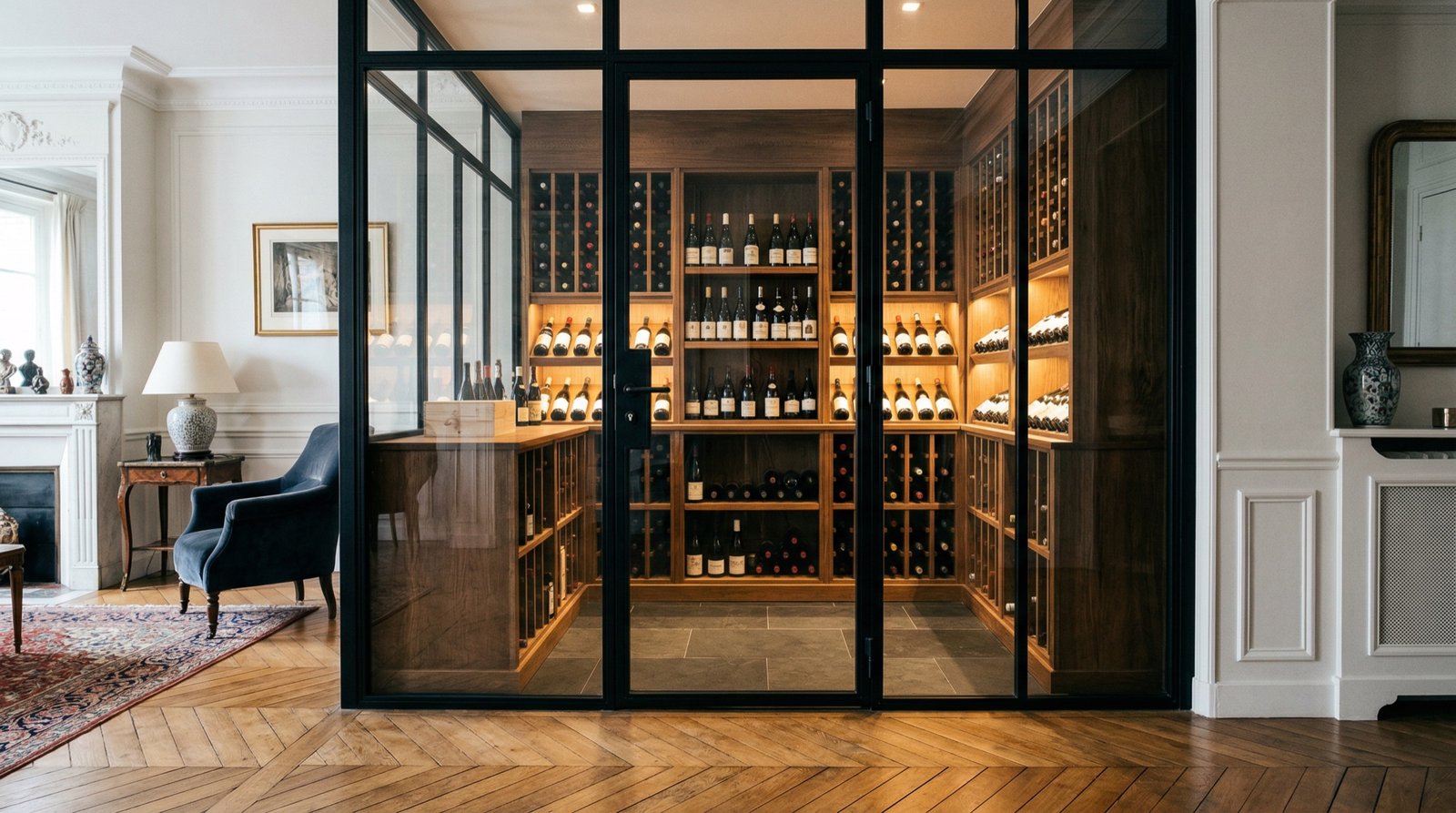
Every project is unique: a cupboard transformed into a climate-controlled cellar for 150 bottles, a dedicated room beneath a glass roof with an insulated glazed door, or a wine wall integrated into the living room like a work of art. Wild Rénovation coordinates all trades — refrigeration engineer, joiner, electrician, lighting designer — to deliver a turnkey result.
"A custom wine cellar is the perfect alliance between the science of conservation and the art of presentation."
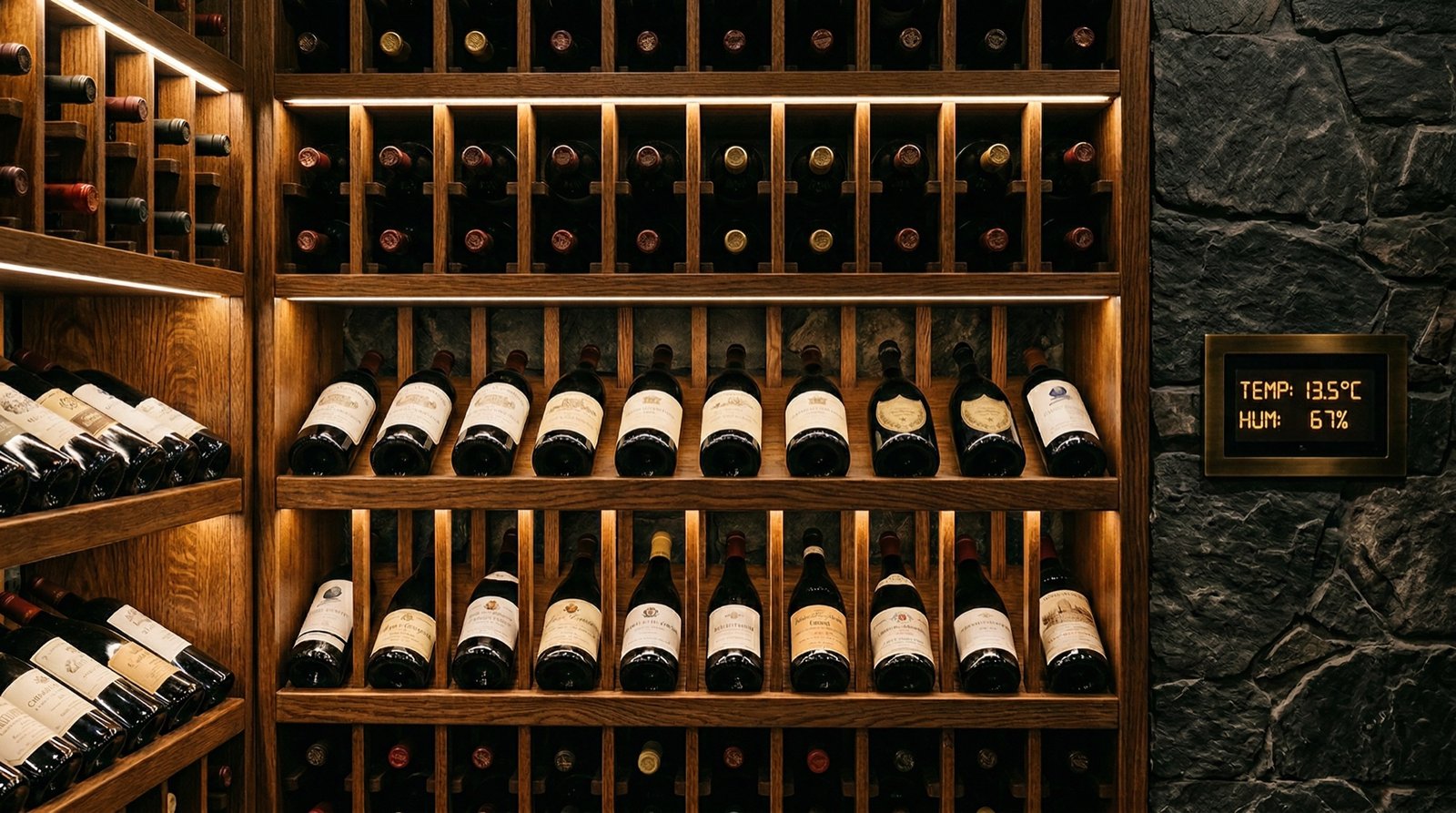
Wine climate control: the technical heart
Precision temperature and humidity
Wine conservation requires a stable temperature between 10 °C and 14 °C and humidity levels between 65 % and 75 %. Any sudden variation accelerates ageing and alters aromas. Wild Rénovation installs specialist cooling units — mono-block or split — sized according to the cellar volume, insulation and the apartment's exposure.
The choice of climate-control system depends on several factors: the possibility of dissipating heat from the condenser, acceptable noise levels in living areas, and required capacity. Split systems, with the outdoor unit on the roof or in a courtyard, offer the best balance of silence and performance in a Parisian apartment.
Thermal insulation and airtightness
The cellar's insulation is just as important as the cooling unit. Wild Rénovation creates a complete thermal enclosure: high-density insulation panels (polyurethane or extruded polystyrene, 60 to 100 mm), continuous vapour barrier and peripheral sealing gaskets. The insulated door, often glazed with double or triple glazing filled with argon gas in a thermally broken aluminium frame, is the most visible and most critical technical element.
Racks and storage: wood, metal or stone
- Solid oak racks — The noble classic, with individual compartments or sliding shelves, raw or varnished finish
- Metal structures — Powder-coated steel or brushed stainless steel, clean lines, contemporary style, maximised capacity
- Reconstituted stone racks — Traditional cellar spirit, high thermal inertia, timeless aesthetic
- Mixed systems — Wood and metal combination for alternating display and deep storage
- Sliding shelves — Easy access for large formats (magnums, jeroboams) and tasting bottles
- Integrated tasting counter — Stone or solid wood shelf, illuminated, for serving and tasting on site
Museum-quality lighting and presentation
Wine cellar lighting must meet two contradictory requirements: showcase the bottles while protecting them from UV. Wild Rénovation uses exclusively low colour-temperature LEDs (2,700 K to 3,000 K), with no ultraviolet emission, integrated into the racks or as wall back-lighting. Presence detectors limit light exposure to the strict minimum.
The presentation can range from the most discreet — thin strips of grazing light between rows — to the most theatrical — a back-lit wall visible from the living room through a glazed partition. The lighting is systematically connected to the apartment's home automation system for centralised control.
Integration into a Haussmann-era apartment
Integrating a wine cellar into a Haussmann-era apartment poses specific challenges. Load-bearing walls limit the possibilities for openings, ceiling heights dictate rack configurations, and building regulations govern cooling unit exhaust routing. Wild Rénovation masters these constraints and offers proven solutions: running ducts through suspended ceilings, exhaust via existing service shafts, integration into a former cellar or service room.
Soundproofing the cooling unit is a major concern in apartments. Wild Rénovation installs anti-vibration mounts, acoustic sleeves on ducts and sound-insulation enclosures around the compressor to ensure imperceptible operation in adjacent living areas.
The Wild Rénovation process
Every wine cellar project begins with a technical site visit: measurement of dimensions, analysis of thermal and acoustic constraints, assessment of the space's potential. Wild Rénovation then presents a detailed preliminary design — 3D plans, material choices, cooling unit specifications — before commencing construction. The project typically takes three to five weeks, from insulation through to final temperature setting and humidity calibration.