
1. Who can buy property in Israel?
The short answer: almost anyone. Israel imposes no nationality restrictions on private residential property purchases. A French, American, European or Asian citizen buys on exactly the same terms as an Israeli citizen.
Three special cases to be aware of:
- State land (karkaot medina) — the majority sit under long-term lease (99 years, renewable) via the Israel Lands Authority (ILA). You buy the building and the land-use right, not the freehold. Common — not blocking but worth knowing.
- Religious-community land (Waqf, Church) — some properties in Jaffa or the Old City. Verify with your orech din before any offer.
- Subsidized housing programs — specific resale conditions apply.
2. Do I need a visa or residency?
No. No visa, no residence permit, no immigration process. Your passport is sufficient to:
- Identify yourself to the orech din
- Obtain an Israeli tax ID for the transaction
- Open an Israeli bank account if needed
- File any tax declarations related to the purchase
The transaction can be done in person, by power of attorney (yipui koach), or by video for intermediate steps.
3. The orech din — the real transaction pilot
Israel has no notary for real estate transactions in the European sense. The transaction is entirely managed by an orech din (עורך דין) — a specialized real estate lawyer who serves as:
- Your legal counsel (one lawyer per party, never both)
- Drafter of the hesem (purchase contract)
- Verifier at the Tabou (land registry) and condominium register
- Intermediary with tax authorities for mas rechisha
- Escrow holder for intermediate payments
Each party has their own orech din. Choice is critical — ideally an experienced international firm with English, French or Hebrew fluency depending on your needs. Wild Renovation can recommend trusted bilingual offices in Tel Aviv.
4. Mas rechisha — the purchase tax
The mas rechisha (מס רכישה) is Israel's purchase tax — paid by the buyer to the Israeli tax authorities within 60 days of signing the hesem. Progressive rates by price tranche, varying by:
- Buyer status (resident or non-resident)
- First residence or additional property
- Price level
Non-resident rates
For a non-resident, there is no zero-rate first tranche. Rates typically start at 8% on the first tranche and rise to 10% above a threshold. Tranches are revised yearly — verify with your orech din at the time of transaction.
Resident comparison
An Israeli resident first-time buyer enjoys a zero-rate exemption on a first tranche, then lower progressive rates. The non-resident gap is significant and should be factored into offers.
Other transaction costs
| Item | Order of magnitude |
|---|---|
| Orech din fees (buyer) | 0.5% – 1.5% of price + VAT |
| Real estate agent (meta'al) | 2% + VAT (if listed via agent) |
| Bank processing (if financing) | Variable per bank |
| Tabou registration | Low (hundreds of shekels) |
5. Israeli bank financing for non-residents
The four major Israeli banks (Hapoalim, Leumi, Mizrahi, Discount) and specialized banks (Bank Yahav, First International) lend to non-residents.
Typical non-resident terms
- LTV: 50% standard, up to 60-70% depending on profile
- Duration: 10-25 years
- Interest: indexed to Israeli prime rate, sometimes to CPI (madad), or fixed. Often mixed structure.
- Currency: mainly shekels, sometimes partial tranches in EUR/USD
- Collateral: 1st-rank mortgage
Dossier to prepare
- Passport + ID proof
- 3 recent payslips or balance sheets if self-employed
- Tax returns (past 2 years)
- Bank statements (3-6 months)
- Proof of down-payment funds (origin traceability)
6. The purchase process, step by step
- Visit and offer (hatzaa) — you visit (or pre-expertise remotely), make a verbal or written offer.
- Preliminary checks — your orech din verifies Tabou title, existing mortgages, easements, permits, any TAMA 38 status.
- Hesem (contract) — signed at orech din's office. You deposit typically 10-15% in escrow. Remainder staged until key delivery.
- Mas rechisha declaration — within 30 days.
- Loan release (if financing) — mortgage registration, progressive disbursement.
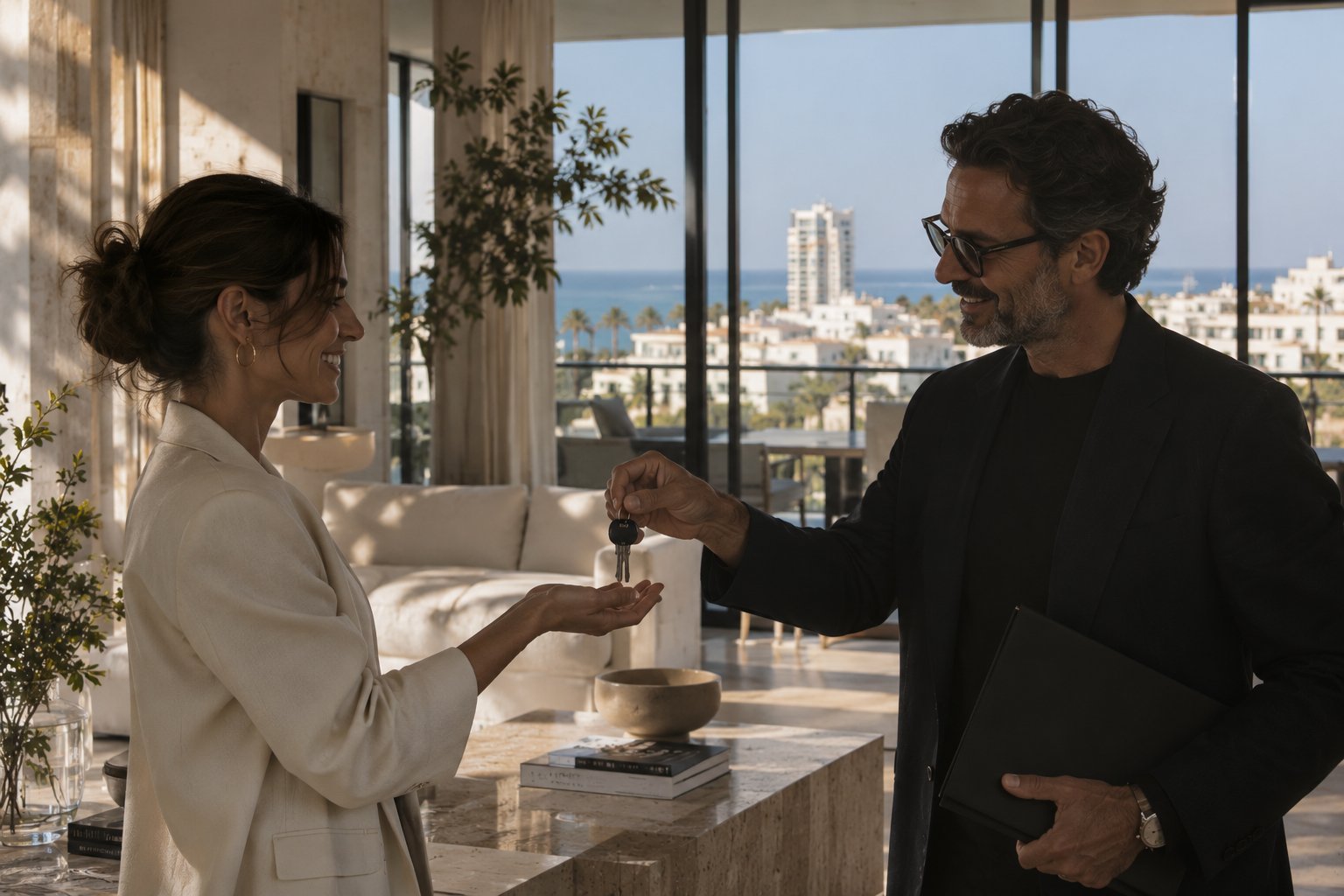
- Key delivery (mesirat miftach) — payment of balance, walk-through, keys handed over, utilities transferred.
- Tabou registration — final transfer of title, filed by your orech din.
Total duration: 2 to 4 months. With bank financing: 3 to 6 months.
The orech din doesn't inspect the building. We do.
The orech din secures the legal side of the transaction. But they don't inspect building condition, renovation feasibility, or budget. That's our role. Before you sign, we send a specialist on site for a detailed report on the actual state of the property and renovation cost at your target standard.
Request a pre-expertise7. The 7 classic pitfalls to avoid
1. Signing without a technical pre-expertise
Many international buyers sign on emotion without evaluating actual condition and renovation cost. Result: ballooning works budget, structural surprises, resale discount. A pre-expertise costs little and changes everything.
2. Choosing a non-bilingual orech din
Your orech din will be your main interlocutor for 3-6 months. If they don't speak your language, tax or heritage subtleties may be lost. Prefer a firm with a bilingual partner.
3. Underestimating mas rechisha
8-10% of price is real money. Factor it into negotiation from the start. Some sellers try to roll furniture into the price to artificially deflate the tax basis — your orech din must verify valuation coherence.
4. Ignoring the building's TAMA 38 status
A building in TAMA 38 progress can bring you value creation… or 2-3 years of construction on your building. See our TAMA 38 guide for the detail.
5. Skipping the pinkas habatim
The condominium register shows Vaad HaBayit status (arrears, open procedures, voted works). A building with large collective debt can blow up your budget.
6. Forgetting your home-country tax implications
Buying in Israel has consequences in your home country: wealth tax reporting if applicable, foreign-account declarations, rental income taxation. Bilateral tax treaties avoid double taxation but need coordination. Consult both a home-country and Israeli tax advisor.
7. Signing in volatile political or currency periods
The shekel can swing meaningfully. A purchase financed in EUR but paid in ILS can cost 10% more in 3 months depending on exchange rates. Plan FX hedging with your bank.